WhatsApp Side Button
Follow Whatsapp WhatsApp

“Shahid Afridi Reacts to Pakistan’s India Match Boycott in T20 World Cup”

Published On: February 2, 2026
Follow Us
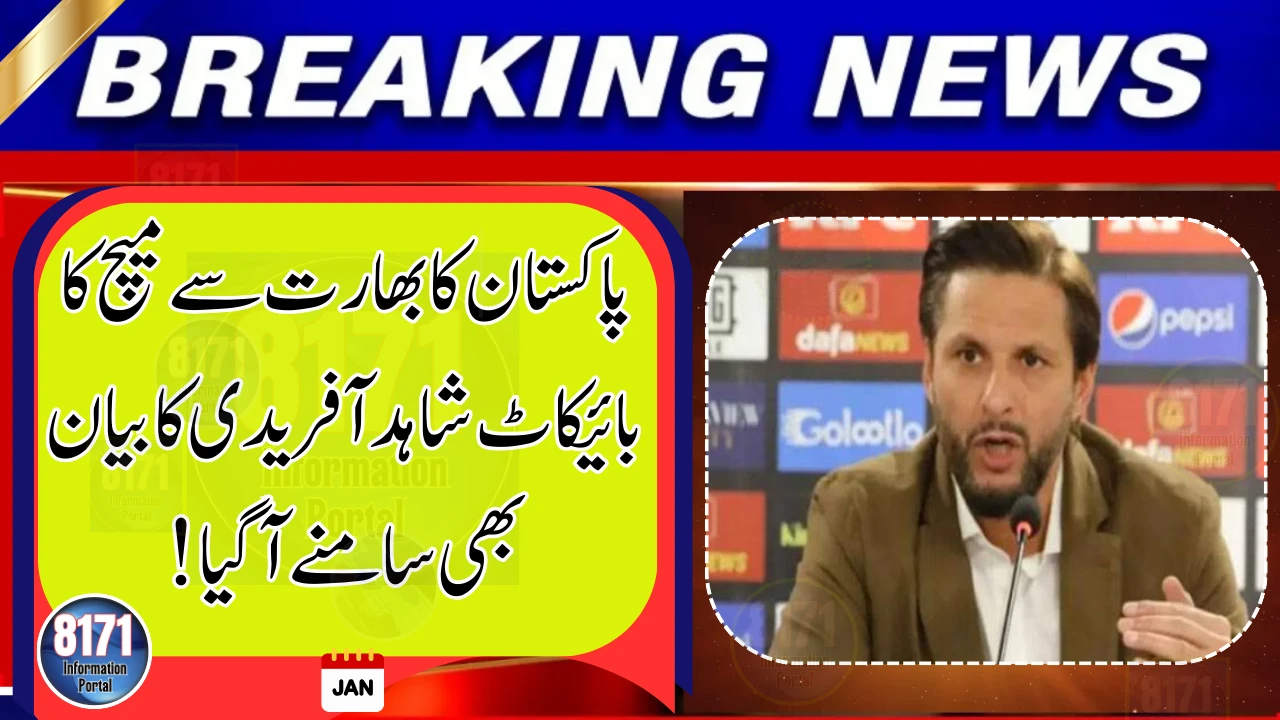
Pakistan’s decision to boycott the highly anticipated T20 World Cup match against India has sparked widespread debate, and now former captain Shahid Afridi has publicly shared his stance on the issue. Taking to social media platform X, Shahid Afridi stated that he has always believed cricket can open doors when politics fails. However, he acknowledged that the current situation has forced difficult decisions. Shahid Afridi’s Reaction Afridi described Pakistan’s absence from the India match as regrettable, but emphasized that he fully stands with the government’s decision. According to him, national dignity and fairness in international cricket cannot be compromised. He further said that this situation presents a critical test for the ICC, urging the governing body to prove through actions—not statements—that it is neutral, independent, and fair to all member nations. Why Pakistan Took This Step The controversy intensified after Bangladesh requested the ICC to shift its T20 World Cup matches from India to Sri Lanka, citing security concerns. Instead of addressing the issue, the ICC opted to include Scotland, raising questions over consistency and fairness. In response, the Government of Pakistan, expressing solidarity with Bangladesh, announced its decision to not participate in the high-voltage match against India scheduled for February 15. ICC Under Pressure Cricket analysts believe the ICC now faces mounting pressure to clarify its stance and restore confidence among member boards. The boycott has once again highlighted the intersection of politics, security, and international cricket. Conclusion While fans may be disappointed, Pakistan’s decision underscores broader concerns about fairness and safety in global cricket. Shahid Afridi’s support adds weight to the government’s stance, making this one of the most talked-about developments of the T20 World Cup.

Pakistan’s decision to boycott the highly anticipated T20 World Cup match against India has sparked widespread debate, and now former captain Shahid Afridi has publicly shared his stance on the issue.

Taking to social media platform X, Shahid Afridi stated that he has always believed cricket can open doors when politics fails. However, he acknowledged that the current situation has forced difficult decisions.

Shahid Afridi’s Reaction

Afridi described Pakistan’s absence from the India match as regrettable, but emphasized that he fully stands with the government’s decision. According to him, national dignity and fairness in international cricket cannot be compromised.

He further said that this situation presents a critical test for the ICC, urging the governing body to prove through actions—not statements—that it is neutral, independent, and fair to all member nations.

Why Pakistan Took This Step

The controversy intensified after Bangladesh requested the ICC to shift its T20 World Cup matches from India to Sri Lanka, citing security concerns. Instead of addressing the issue, the ICC opted to include Scotland, raising questions over consistency and fairness.

In response, the Government of Pakistan, expressing solidarity with Bangladesh, announced its decision to not participate in the high-voltage match against India scheduled for February 15.

ICC Under Pressure

Cricket analysts believe the ICC now faces mounting pressure to clarify its stance and restore confidence among member boards. The boycott has once again highlighted the intersection of politics, security, and international cricket.

Conclusion

While fans may be disappointed, Pakistan’s decision underscores broader concerns about fairness and safety in global cricket. Shahid Afridi’s support adds weight to the government’s stance, making this one of the most talked-about developments of the T20 World Cup.


Hamza Ali

Hamza Ali is an experienced writer contributing to the pefma.com.pk platform. With a strong background in government projects and infrastructure development, his work focuses on bringing attention to the impact of public sector initiatives.

Leave a Comment