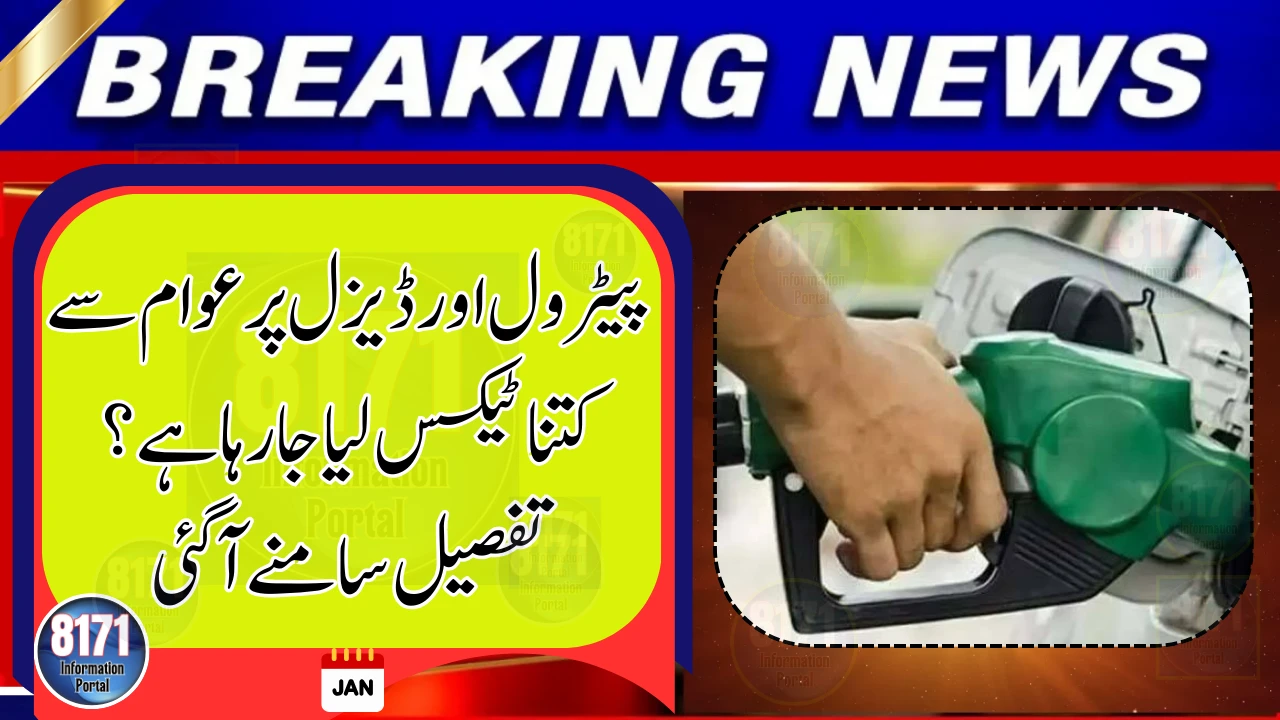
The Ministry of Petroleum has presented a detailed breakdown of taxes collected from consumers on petroleum products in the National Assembly, shedding light on how fuel prices are structured in Pakistan.
Three Types of Taxes on Fuel
According to the official documents submitted in parliament, three different types of taxes and levies are currently being charged on petroleum products:


-
Petroleum Levy
-
Climate Support Levy
-
Customs Duty (10%)
Taxes on Petrol
The documents reveal that consumers are paying Rs 82 per litre in total taxes on petrol, including:
-
Petroleum Levy: Rs 79.62 per litre
-
Climate Support Levy: Rs 2.50 per litre
-
Customs Duty: 10%
Taxes on High-Speed Diesel (HSD)
For high-speed diesel, consumers are charged around Rs 78 per litre in taxes, broken down as:
-
Petroleum Levy: Rs 75.41 per litre
-
Climate Support Levy: Rs 2.50 per litre
-
Customs Duty: 10%
Taxes on Other Petroleum Products
The parliamentary document further disclosed taxes on other fuels:
-
Kerosene Oil: Rs 18.95 petroleum levy
-
Light Diesel Oil (LDO): Rs 15.37 petroleum levy
-
Furnace Oil:
-
Rs 77 petroleum levy
-
18% General Sales Tax (GST)
-
Legal Framework for Tax Collection
The Ministry of Petroleum clarified that:
-
Petroleum Levy is collected under the Petroleum Levy Ordinance, 1961
-
Climate Support Levy has been in effect since July 1, 2025
Officials stated that these levies are a key source of government revenue, though rising fuel taxes continue to impact inflation and household expenses across the country.