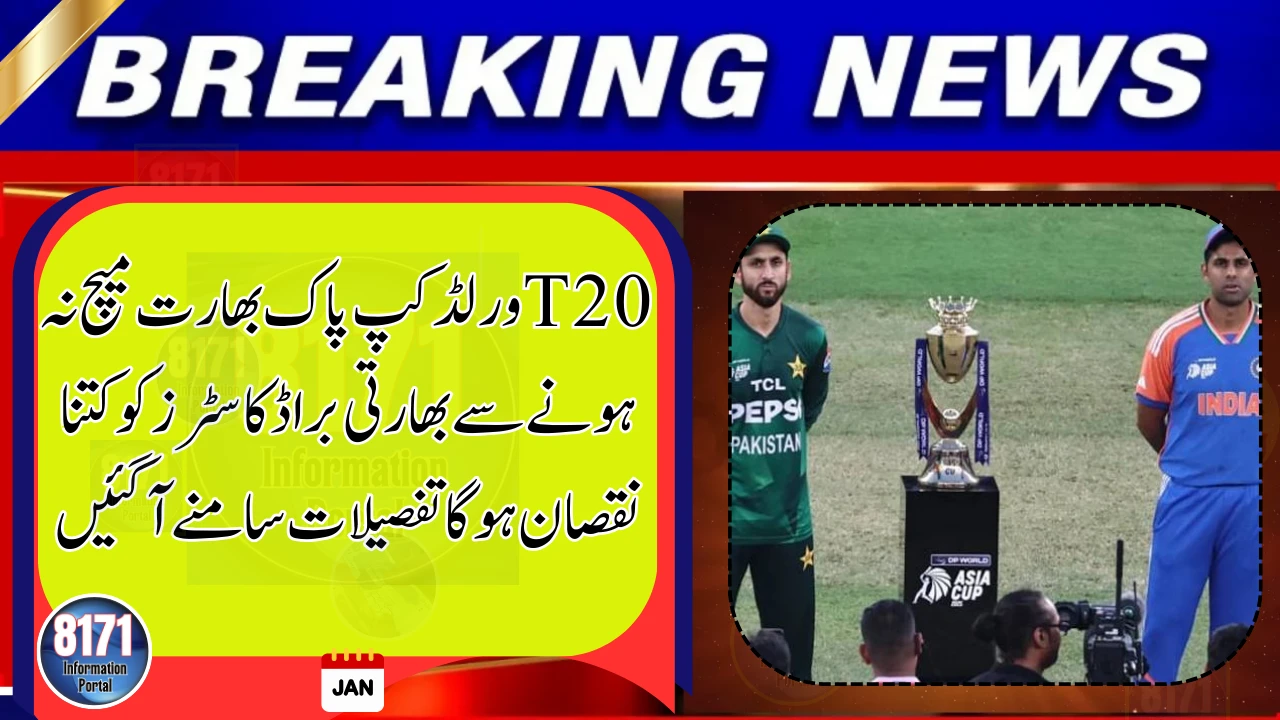
The possible absence of a Pakistan vs India match in the T20 World Cup has triggered major financial concerns, especially for Indian broadcasters and global cricket stakeholders.
The Government of Pakistan has allowed the national team to participate in the tournament, but Pakistan will not play against India in the scheduled fixture on February 15, expressing solidarity with Bangladesh. This development could reshape the tournament’s financial landscape.


Why the Pakistan-India Match Matters So Much
A Pakistan-India cricket match is widely considered the biggest rivalry in world cricket, attracting record-breaking TV ratings, sponsorship deals, and advertising revenue. Experts say this single match generates a significant share of tournament earnings.



Reports suggest that if the match does not take place, Indian broadcasters could face losses of around $500 million (approximately Rs 141 billion). The absence of the high-voltage clash would also impact stadium ticket revenue and global viewership.
Impact on ICC Revenue
The International Cricket Council (ICC) also stands to lose substantial gate money and commercial revenue. Analysts estimate that nearly half of a T20 World Cup’s total revenue is linked directly or indirectly to the Pakistan-India encounter.
This highlights how financially crucial the match is, not just emotionally for fans but economically for the sport.
Possible Legal and Financial Complications
Sources indicate that Pakistan receives around $35 million annually as its share from ICC revenue distribution. However, if broadcasters suffer heavy financial losses, legal complications could arise regarding contractual obligations and responsibility for the match cancellation.
Cricket experts believe that such a scenario could lead to complex negotiations between boards, broadcasters, and ICC officials.
More Than Just a Cricket Match
Beyond finances, the Pakistan-India clash represents a cultural and sporting moment watched by millions worldwide. Its absence would not only impact revenue but also reduce the tournament’s global excitement and engagement.